


Season for Serengeti Migration: Month-by-Month Guide
The Serengeti Migration is the world’s greatest wildlife spectacle—over 1.5 million wildebeest, 400,000 zebras, and thousands of gazelles move in a never-ending cycle across Tanzania’s Serengeti and Kenya’s Maasai Mara. This guide explains where the herds are each month, how to see dramatic river crossings, calving, and predator action, and how to plan your perfect migration safari.
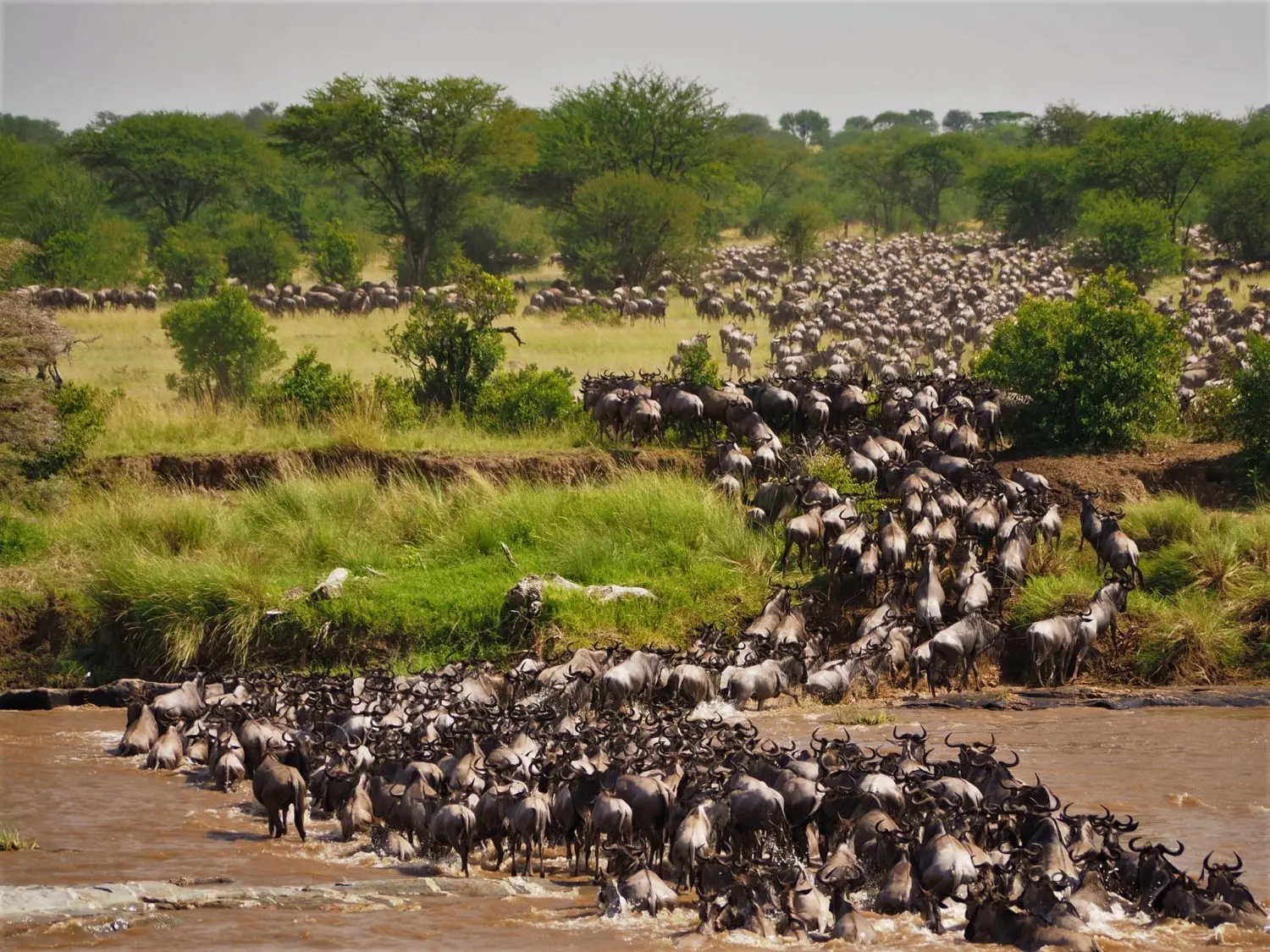
What is the Serengeti Migration?
The Great Migration is a year-round movement of wildebeest and zebra following the rains and fresh grass. The cycle includes dramatic river crossings (Grumeti and Mara Rivers), mass calving, and constant predator-prey drama. The migration route covers the southern, central, western, and northern Serengeti, plus Kenya’s Maasai Mara.
Serengeti Migration Calendar: Where Are the Herds Each Month?
- January–March (Calving Season, Ndutu/Southern Serengeti): Wildebeest gather on the short-grass plains. February is peak calving—thousands of babies born daily, attracting predators. Excellent for action and photography.
- April–May (Green Season, Central/Western Serengeti): Herds move northwest as rains fall. Fewer tourists, lush scenery, and dramatic storms. Roads can be muddy, but wildlife is abundant.
- June (Grumeti River Crossings): Wildebeest cross the Grumeti River in the western corridor—watch for crocodile action. Herds start heading north.
- July–August (Mara River Crossings, Northern Serengeti): The most famous crossings happen at the Mara River. Huge herds, dramatic scenes, and predator encounters. Book early—this is peak migration season.
- September–October (Northern Serengeti/Maasai Mara): Herds split between Tanzania and Kenya. River crossings continue. Excellent for seeing big cats and dramatic chases.
- November–December (Return South): Rains begin in the south. Herds move back to Ndutu and southern Serengeti, starting the cycle again.
Tip: The best time and place to see the migration depends on what you want—calving, river crossings, or predator action.
Use this calendar to plan your trip!
Best Places to See the Migration
- Ndutu (Jan–Mar): Calving, predator action, and open plains.
- Western Corridor (May–June): Grumeti River crossings, fewer crowds.
- Northern Serengeti (July–Oct): Mara River crossings, dramatic scenes.
- Central Serengeti (Year-round): Resident wildlife and some herds always present.
Planning Your Serengeti Migration Safari
- Book early for July–October (river crossings) and February (calving).
- Choose mobile camps for the best migration access, or lodges for comfort.
- Bring a good camera, binoculars, and layers for changing weather.
- Consider combining Serengeti with Ngorongoro or Tarangire for variety.
- Ask us for custom advice—migration timing can shift with the rains.
Frequently Asked Questions
- When is the best time to see river crossings? June (Grumeti) and July–October (Mara River).
- Is the migration predictable? Mostly, but rains can shift timing. Flexible travel dates help.
- Can I see the migration in Kenya? Yes, July–September in Maasai Mara, but most of the year is in Tanzania.
- Is it crowded? July–August is busiest. For fewer crowds, try May–June or September.
Ready to witness the Serengeti Migration? Contact us for expert planning, custom itineraries, and the latest migration updates. Your adventure awaits!